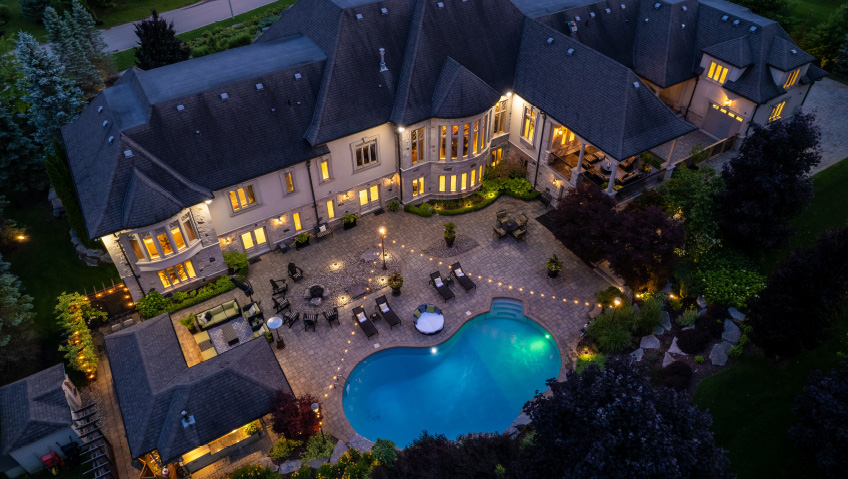
As another summer season promises hot weather and lots of sunlight, it’s important for many of today’s homeowners to have their favourite outdoor spot be one that’s closer to home—in fact, to have that spot be part of the home itself. Generations have centred their summer activities around the fabled backyard and patio space, and as time goes on, new improvements and approaches to outdoor living are being introduced to make it the ultimate place for rest, relaxation, and recreation.
The advent of new technology across countless industries, especially in the way of AI (artificial intelligence), means that there are new advancements every year in practically every market niche, even when it comes to creating a backyard and/or patio space. As usual, the aim for a lot of homeowners is an outdoor space that provides maximum comfort and security, and manufacturers in the construction space are rising to meet that desire. According to an article for HBSDealer by Joe Raboine, “Experts predict that the outdoor living market will hit $3.66 billion by 2033.”
Lee Rivett for Retail Insider says that retailers across Canada, for instance, are beginning to move into displaying outdoor living supplies and ornamentation much earlier than usual in 2026, which could be an indicator that it will be an important market segment this year.
It will likely not be surprising for many to see more AI-infused technology become part of the typical backyard experience. In an article for Residential Tech Today, Rob Stott says that automation is already here for many areas of outdoor living and luxury. For example, motorized screens and outdoor shade structures like pergolas allow homeowners to relax in the shade to their desired intensity and coverage. Stott says that these systems can also be helpful in transitional zones like covered patios and screened porches to improve sun protection, wind and rain management, and even bug repelling. Lighting can also be controlled via LED strips on dimmer switches and customizable lighting schemes.
Outdoor automation can also be valuable for additional weather protection, as with sensors that measure important outdoor elements like humidity. “This level of automation is particularly beneficial for second homes or vacation properties,” says Stott, when owners may not be present to ensure an optimal environment. Now, homeowners invested in digital and AI platforms through Amazon Alexa and other like platforms can control lighting, home security, HVAC (Heating, Ventilation, and Air Conditioning) systems, and now the patio environment overall in one place.
An article for Realty Times says that automation in backyard technology continues to shape what the modern patio looks like. Products like the Pergola X by StruXure, a Georgia-based builder, allow for automatic control over the elements with innovations like sensors that automatically close the pergola roof when it’s raining or detect movement to synchronize with homeowner lighting. Even heating elements like fire pits can be remotely controlled and adjusted via mobile apps or even voice-controlled AI assistants.
StruXure is joined by others in the space aiming to make an impact in outdoor living, with outdoor furniture companies like Yotrio Corporation, Brown Jordan, Agio International, and more all focusing their efforts on the values of innovation, sustainability, and aesthetic appeal within the sector.
Another trend behind backyard and patio spaces is the desire of homeowners to create a space that supports physical and mental well-being. This endeavour can take many forms, like an outdoor space designed to enhance nearby natural elements like plants and trees. It can even mean simply making room for elements that look to bring a homeowner further comfort, from a simple yoga mat for daily practice to a barrel sauna or cold plunge for more intensive practices. Lee Rivett says that, when it comes to selling products associated with outdoor living, “Retailers are selling an aspirational lifestyle centred on entertaining, relaxation, and home investment.”
The patio/backyard space as one for positive effects on health has to do with its sensory qualities as much as any one piece of technology. Outdoor living experts often suggest promoting a quiet, peaceful spot through the plants and greenery you may choose to add, the natural light you let in, and the use of both the local environment and helpful tools like barriers or vertical wall gardens to keep noise at bay. Adequate space is also encouraged.
Comfort and ease of use are not the only concerns for modern homeowners, as many want to embrace the use of more ecologically friendly building materials so as to lessen a new project’s carbon footprint. Joe Raboine’s article says that alternative materials for fencing and decking became a much bigger talking point in 2025, including vinyl and aluminum options. Materials like these can be used to create spaces that are more resistant to weather elements like snow and rain as well as heat and insects.
The use of alternative materials to create a wood-like exterior in the backyard/outdoor space is called composite decking, a product now offered by hardware store chains. This practice allows for various aesthetic specifications to be made without sacrificing durability against typical North American weather or the wear-and-tear that traditional materials experience over time. Modular deck systems, ones that can be customized easily and installed affordably, are also a rising trend in the backyard industry. Raboine says that hardscape (i.e. pavement) manufacturers are bringing more modularity into their product designs because of its increasing popularity and the desire for customers to create a patio that is truly their vision.
Nothing is above rethinking in the backyard, to the point that even grass lawns are beginning to fall out of favour. The eco-friendly lens sees lawns as a more maintenance-intensive backyard option that has a less favourable environmental footprint, especially when compared to alternatives like low ground covers or turfs. Alternatives like these, such as certain clovers, echo the appearance of grass but require far less upkeep, with many types of cover calling for less watering or mowing than traditional grass. In some areas of the world, the methods of lawn upkeep (watering, sodding, mowing) are placing excessive strain on valuable water and electricity resources, so the move into environmentally friendly takes on the classic is a trend likely to accelerate with time.
No matter the reason for a new backyard or patio project, there are all-new considerations for both would-be and experienced builders as a new season approaches. Whether incorporating automation and new tech into the space, building more consciously, or simply looking to make a house feel like home, there are so many new and exciting ways to improve your outdoor experience and make something that may have only been imagined until now.