
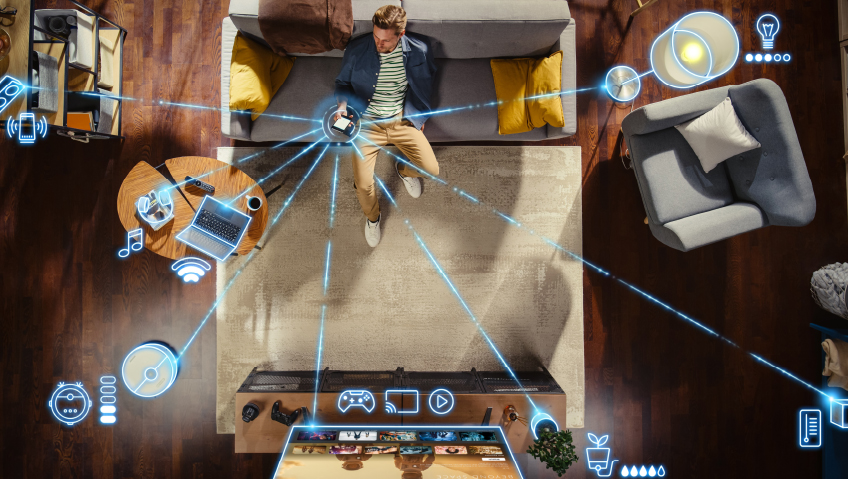
As interconnection between all manner of electronic devices and interfaces continues to expand, usually within the classification of the Internet of Things (IoT), it seems that almost every aspect of modern life is becoming electronically wired for greater convenience, safety, and efficiency. Smart devices, especially those that can be tailored to their owners’ personal specifications, are making waves in countless industries, including when it comes to optimizing the experience of house and home. What technologies and trends are being emphasized in home automation today?
Consumer technology companies have been making products for home automation for quite some time, no doubt a smart move to carve a place within an industry that is currently valued at around $200 billion. Major brand names are now literal household names thanks to home assistant products like Amazon’s Alexa or Apple’s Siri devices, as well as through complete home automation packages like Google Home, Samsung SmartThings, or the Apple HomeKit. What these packages offer is something that is highly sought after in the smart home space, which is a unified ecosystem of control. This means that every aspect and device within a smart home setup works together to create the ideal experience for a customer, which echoes how IoT is understood with today’s technology.
A unified ecosystem in home automation usually either refers to or includes the concept of interoperability, which is the ability of sensors in each aspect of home technology to communicate with each other in a manner that supersedes market competition. In an article for Internet of Things magazine, authors Dario Russo, Vittorio Miori, Gabriele Tolomei, and Dimitri Belli say that the goal of interoperability is “to implement solutions that allow users to introduce any HA device without worrying that it is incompatible with the current system.” This makes it so that each device can work seamlessly, even if the setup includes piecemeal solutions from different companies.
This level of device interoperability is made possible by efforts like the Matter Protocol, a universal open-source smart home standard that many large companies in the home automation space have agreed to adhere to. This agreement, developed by the Connectivity Standards Alliance (CSA), assures communication between different brands of devices to operate, functionally, as one. The Matter Protocol is being consistently updated and has recently moved to version 1.6; previous versions, like 1.4, allowed for these ecosystems to automate device access sharing with just a single user consent. Its near-universal adoption by big tech suggests that these companies understand how lucrative the market is and how valuable interoperability is for customers (and to their bottom lines).
Within these home automation systems, there are various aspects that technology companies are emphasizing to appeal to modern consumers. One such aspect is energy management, wherein smart devices are used for both energy conservation and user comfort, from smart thermostats that automatically adjust a house’s temperature based on various factors, to smart lighting that can set schedules for home light usage with an emphasis on greener energy decisions. One of the top trends in smart home LED technology, according to American Bright LED, is tunable, full-spectrum bulbs and fixtures that can automatically adjust colour temperature and brightness. These LED items integrate seamlessly with home automation systems and can therefore modify interior or exterior lights to a customer’s desire, even to the point of matching sleep patterns or working to enhance productivity.
One of the more popular home automation systems has to do with another growing consumer value: security. This can be seen widely across social media with the increased usage of consumer-grade home and porch cameras like the popular Ring Camera. Such products offer considerable variations on their base models to fit customers’ energy and internet preferences, from wired or wireless cameras to solar-powered models. These cameras can be used in concert with other smart security devices like automated door locks to provide a greater sense of comfort for homeowners whether at home or away.
Another trend in home automation is device management going local; that is, storage and memory moving from the cloud to localized apps within the home. In a piece for BGR, Jason Schneider says that open-source technologies like Home Assistant are growing in popularity thanks to this localized control, wherein “you can pull all the devices you may already own together into one interface.” Further features in the HA app also allow for greater interoperability than cloud-based home automation. Having a private, local connection for smart home devices also avoids potential cash sinks like subscription services and can be a way to bolster cyber-security among various connected devices.
Beyond brand names and singular items, much is evolving underneath the hood of home automation technology. For instance, this technology is often reliant on built-in sensors that can sense the presence of a person in or out of doors and account for their whereabouts; however, while sensor technology has often been good at detecting solitary and still objects, it has not necessarily been adept at dealing with a body in motion. A newer development in the space has been the rise of mmWave, radar-based sensors that are better suited to tracking movement. These mmWave sensors send out electromagnetic radio waves between 30 and 300 GHz, which allows for the tracking of tiny changes in movement and, as such, finer-point switches in a device’s smart features. This kind of technology needs to continue evolving and improving to meet and lead industry standards.
Of course, something else powering smart home technology in recent years is AI (artificial intelligence). It is these AI systems that are programmed to undergo machine learning, which is a kind of pattern recognition that enables the AI to make predictive changes based on user data. This also allows technology to not only detect changes but to make changes in an environment and even, over time, anticipate user needs. AI can be used to anticipate the changing of air quality in a house and filter in more breathable air, or to bolster detection software to differentiate friend from foe. As smart home manufacturers continue to offer more robust and diverse products, it is often a form of AI that is powering the home’s internal systems and delivering the customizable package that so many consumers want out of their smart home ecosystem today.
The possibilities for home automation technology seem almost limitless right now and more continue to be developed as hardware and software capabilities keep improving. A blog post for manufacturer Jabil says that, in the future, home-based smart appliances will be able to perform hyper-specific functions based on user need and desire, like smart ovens that cook food to the exact right temperatures or smart fridges that suggest recipes. “All these developments are teasing us from just around the corner. We just have a few more things to figure out before then.”
In a market that is valued highly and seemingly poised to expand ever further, homeowners looking to step up their at-home technological capabilities will continue to have no shortage of options to make life easier and streamline daily activities.