A little over a decade ago, biophilic design philosophy was virtually unknown. As the concept had reluctantly been seeping into mainstream design via the work of proponents like Frank Lloyd Wright, known for what he termed “organic architecture” around 1908, the austerities introduced in recent years by COVID-19 truly brought home the message of the importance of nature in our collective daily human experience. Two questions that had been asked by thought leaders for decades, but were relegated to the sidelines by decision makers, suddenly became imperative to the mental, emotional, and physical health of people in cities: how can we truly reconnect with nature in urban settings through design and engineering, and how can we fully integrate ecosystems in the process known as regenerative design?
As it turns out, many of those asking these questions have been providing practical, well-researched solutions for decades. Connecting with one of Canada’s most respected pro-environmental icons, Herb Hammond, forest ecologist and co-author of the 2024 book, Nature-First Cities: Restoring Relationships with Ecosystems and with Each Other, yielded fresh insights. I asked him for insight into practical tools to support those in the construction industry in making the shift toward regenerative design and building.
In Hammond’s experience, developing a sufficient frame of reference to understand regenerative design and how to achieve it demands education and a reset of perspective. Beyond his most recent publication, he cites another important read in developing this understanding—Earth Democracy: Justice, Sustainability, and Peace by Vandana Shiva, PhD in quantum theory from the University of Western Ontario. In Hammond’s opinion, this book is so crucial to the greater mission of urban ecological regeneration and saving the planet at large that it ought to be a prescribed work in high schools.
“For those [who] have already passed high school, her book [should] be required to be part of [design and construction] professions and all other occupations, particularly the occupation of politics,” he says. “Along with the brilliance of ecological apartheid, another of her important observations is ‘In Nature’s economy, the currency is not money, it is life.’”
For designers and those in the construction industry who find themselves stuck in outdated world views and ways of doing things, Hammond counsels establishing a connection with nature. Walking in nature, he suggests observing the self-regulation and self-maintenance that underscore biological processes and their seasonal changes—that we should notice how interconnected, interdependent ecosystems seamlessly combine to form larger systems. “Note that ecosystems exist at the full range of spatial and temporal scales, and, thus, when we plan activities in ecosystems, we must consider and accommodate the full range of spatial and temporal scales,” he says.
Once the basic experience and understanding of whole, intact ecosystems become clear, the need for equally complete service systems and their mechanisms—to develop genuinely healthy cities that are good for people to be in and resilient to flux—becomes obvious. He also notes that nature’s services to accomplish many such tasks are far cheaper than man-made and engineered solutions that are not resilient to change and cost a fortune to maintain.
For those in the construction industry looking to make a difference but uncertain of where to start, he also has a few suggestions. “Start with restoration of the natural composition, structure, and function of ecosystems in locations that are amenable to nature. Where people see her advantages [as opposed] to technical engineering fixes,” he says. He also suggests testing concepts on private land that is preferably free and easily accessible. “This restoration will lead to nodes of restored ecosystems, which become anchors for a network of fragments of nature and restored ecosystems.” Within the larger ecological matrix, these nodes include and connect to what Hammond refers to as the natural water movement network, originating in the backyards of private homes, which serve to restore and balance the impact of urbanization.
Equally imperative is realizing that regenerative design and construction are impossible without the valuable and powerful voices of industry leaders. As part of the education process that must underpin such involvement, Hammond’s advice is to consider collaborating with “practical ecologists able to think in the range of spatial and temporal scales within which nature exists.” In this way, industry leaders gain access to the academic, practical, and intrinsic understanding necessary to work harmoniously within the frameworks of ecological complexity rather than against it.
“Start by learning about natural ecosystem composition, structure, and function; ecosystem diversity; and the breadth of benefits, [such as] services provided by intact, natural ecosystems. Then compare that with the breadth, cost, and equity of engineered technical services,” he says.
In Nature-First Cities: Restoring Relationships with Ecosystems and with Each Other, an outstanding collaboration between academics from various disciplines, the authors provide practical solutions for inviting nature into cities without “disowning” inhabitants. The authors’ motivation for writing it invites the industry to deeper contemplation on the whys alongside the how-to of regenerative design. “People in cities want nature nearby. But when developers and city planners seek to incorporate nature, they often settle for the wrong nature (homogenized green space), in the wrong location (isolated patches determined by economic considerations), and in the wrong amount (not enough),” they write.
The solution underscoring the book’s thesis is led by the science and practice of Nature-Directed Stewardship (NDS). As the creator of the NDS system, developed in collaboration with First Peoples over decades, Hammond suggests becoming a respectful part of the ecosystems we ultimately embody, making NDS a field of study that will hopefully find its way into all civil design courses and even high schools. Because, as mainstream designers, architects, and construction experts inch ever closer to reimagining the wild side of urban human spaces and their impact on our wellbeing on a more intrinsic, wholesale level, meaningful resources and thought leadership like NDS stand to make it possible for just about anyone in the construction industry to contribute positively to this new epoch in the evolution of space making.
The key, however, is to bring home the message that we, as a species, are not at the top of a pyramidal food chain, but rather an integral part of many complex systems. David Suzuki perhaps put it best at a recent Broken Promises rally in Nelson, British Columbia. “We’ve shifted from an eco-centric way of seeing the world to an anthropocentric way. We think that we’re at the top of the pyramid. [That] we’re at the top [and] everything [else] is down below us,” he said. Therefore, to take regenerative urban development from the fringes of design (as the World Economic Forum describes its current position) into the mainstream, universities and other tertiary institutions must embrace the subject, as some institutions in Canada and elsewhere in North America are doing.
As this exciting new era of regenerative urban design takes root, the Universities of Calgary and Vancouver appear to be the most active so far. Some cities are also working hard to bring about change. One outstanding example of an American city that has committed to integrating environmental wellness into its development is Dania Beach in Florida, through its Broward County Sea Turtle Conservation Program (BCSTCP). Along with the county, the city and its locals act as true stewards of the loggerhead, leatherback, and green turtles that nest along its beaches. Even though these efforts are perhaps not a pure example of regenerative design per se, the passion and commitment with which Dania Beach and its communities work to provide extensive lighting ordinances, raise public awareness, and monitor initiatives to protect these vulnerable species—all while actively finding ways of adjusting urban development plans and the local lifestyle to safely accommodate these wild animals—is nothing short of commendable and an example to other cities across the continent.
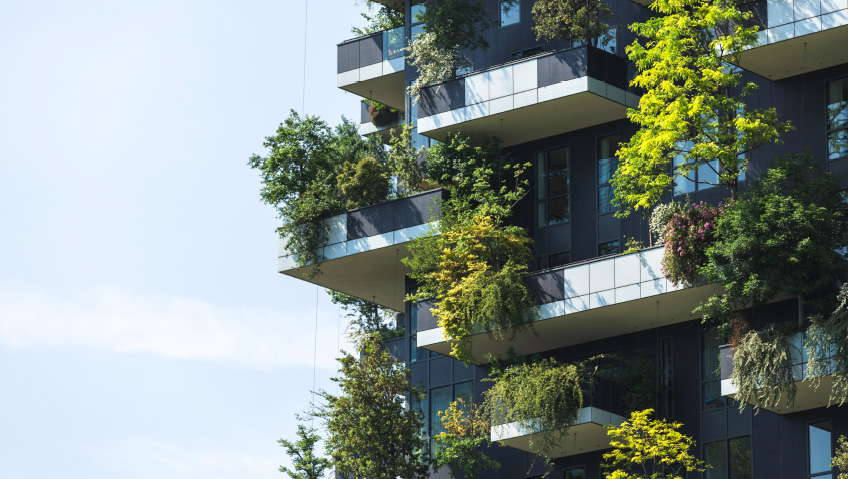
Albeit slow, industry changes are becoming evident. In the world of architecture, the green wall concept is morphing from a futuristic design statement to an increasingly common feature. Interior design has seen many avant garde homes and even offices, like Google’s in Dublin, which features enough greenery to make it reminiscent of the Amazon on a massive corporate terrarium scale. Now that the world has awakened and biophilia is evolving into a recognized subject as regenerative urban design, the concept of smart cities appears to be reverting to the original definition of the word in the wake of technology failing human well-being.
Firmly rooted in social cohesion, regenerative urban design also stands to play an integral role in reestablishing the equilibrium that we lost during the brutalist post-World War design eras, which are ultimately the sources of social decay in many communities. By actively listening to the needs of communities and considering questions like those posed by Mahmoud Keshavarz on the obscured racialization of humanitarian design, civil designers aiming to establish social ownership of functional natural integration projects are more likely to achieve successful, sustainable outcomes in the long run when they become aware of the unconscious bias often involved in designing for multicultural societies.
Hammond agrees that it is helpful to remind ourselves of our unconscious biases. “The ecological, social, and economic benefits that flow from [the regenerative] process will convince virtually anyone that cities and urban areas that protect and restore nature work for everyone. One important caveat to this statement is that this process must be rooted in equity, where all benefit,” he says.
And so, the final takeaway is simple. While regenerative design may be a shiny new buzzword, the reality is that achieving it will take a commitment to changing how we think about establishing nature within urban settings. Successfully creating connected, thriving ecosystems within the urban landscape demands closer collaboration between landscapers, architectural and interior designers, and even nature conservators and the preservers of traditional knowledge of the land—as we see in the range of academic schools of thought that brought Nature-First Cities to life.
As Herb Hammond says in this timely book, “Nature belongs where we are, and we belong in nature. From that premise flows an invitation that enhances cities, restores our relationship with nature, and rebuilds our relationships with each other.” While these ideas may appear foreign to us now, his team’s research shows that combining nature with higher density through regenerative design is the secret to success. “Most importantly, [regenerative urbanization] needs to be built on reciprocity. We’re given a gift. We have an obligation to give back,” he adds.