When construction accounts for 40 percent of global carbon emissions, sustainability can no longer be a “nice to have,” but rather a “must have” for construction projects, particularly if communities are to achieve their emissions reductions goals.
Luckily, adaptive reuse has the capacity to replace demolition and new construction as a viable alternative that promotes sustainability, cost savings, and a slew of other advantages.
A Canadian case study examining life-cycle assessments for existing buildings showed that adaptive reuse can achieve whole-life carbon reductions of nearly 30 to 70 percent or more compared with demolition and new construction on the same site, which will be key to achieving sustainability targets. This means that adaptive reuse can no longer be a niche offering, but instead it must become a core competency for those companies looking to make their mark on the industry moving forward.
What is adaptive reuse?
Adaptive reuse is an approach that takes what is old and makes it new again. When the conditions are right, the results are spectacular. However, they are not without their challenges.
Adaptive reuse comes in many forms, with countless examples of exceptional design and execution. And, while many sites hold historical significance that are preserved through this approach, adaptive reuse isn’t reserved for that application alone.
From commercial and industrial spaces like old factories and warehouses, to cultural or heritage spaces like churches and schools, these spaces can find new life with secondary purpose as residential, retail, hospitality, or even tech campuses. The structural simplicity and staying power of these buildings, paired with high ceiling heights, often make them a viable choice. In many cases, these structures were built to last.
While historic preservation and restoration is a big part of adaptive reuse, repurposing and urban infill are other ways the approach is being leveraged to promote sustainability and optimize available space and existing infrastructure to meet the needs of a community. Repurposing existing or obsolete buildings preserves their heritage and architectural character, but it also presents an opportunity to reduce construction costs, maintain the unique identity of a neighbourhood or a community, and craft exceptional projects that set the standard for beauty and function.
The World Economic Forum sees adaptive reuse as a critical component of community revitalization, particularly in densely populated urban centers. Not only can these structures work to breathe new life into communities, but they can also serve to create circular economies by eliminating waste and reusing, repairing, and recycling what already exists. These projects preserve embodied carbon within the building’s existing structure and materials, in addition to avoiding demolition and transportation of the refuse materials, as well as the carbon emissions attributable to the new construction. According to the American Institute of Architects, the avoidance of demolition and new construction can save anywhere between 50 and 75 percent of the carbon emissions that an identical building built new would generate.
With no demolition costs or land acquisition costs, as well as the common provision of tax breaks or grants to support these kinds of developments which utilize existing infrastructure, there are certainly advantages to be had.
Not all that glitters is gold
More than 30 percent of buildings are demolished for reasons that have nothing to do with the physical state of the building, but rather the land itself, and it can take up to 80 years for a new energy-efficient building to offset the impacts of its construction. And, to top it off, residential rehabilitation creates 50 percent more jobs than new construction. But there are many other considerations that need to be made before moving forward with adaptive reuse.
Many of these advantages, particularly the financial savings, depend greatly on the building itself, the condition it is in, and the contingencies that are uncovered during construction. Not every structure is suitable for adaptive reuse and those that are selected are not without their challenges. In many cases, the outcomes are impressive, but the costs of remediation are high, especially where problems are hidden beneath the surface.
Adaptive reuse can also come with a great deal of unpredictability during the construction process, with challenges emerging like lead, asbestos, information gaps throughout the years, and the need for specialized labour to complete complex retrofits, among others. This means that any costs that were saved during demolition can manifest in the form of discovery costs.
Further, from an architectural standpoint, older structures often come with their share of spatial compromises, as well as the potential for zoning, regulatory, or building code compliance issues, though many of these can be mitigated on the front end.
To ensure the success of an adaptive reuse project, work must be done to gauge the degree of risk associated with a project. While not every challenge can be foreseen or anticipated, early structural assessments are worth the time and investment.
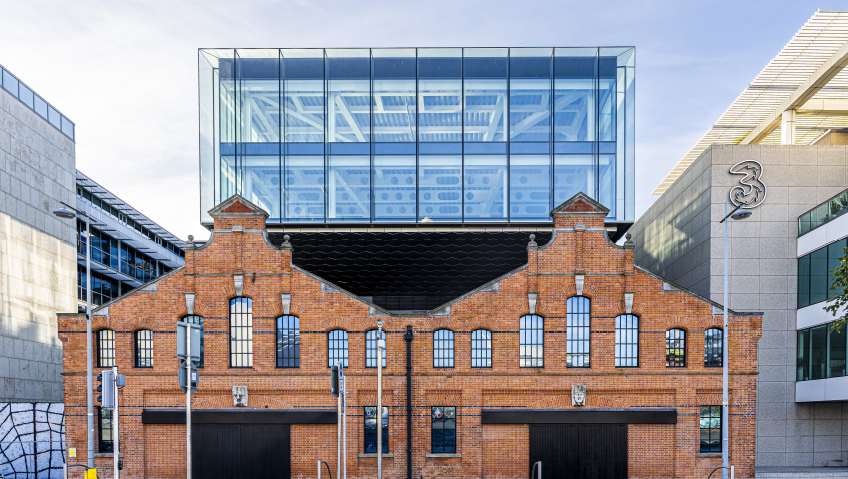
Successful adaptive reuse projects also depend on a design that respects the existing structure, function, and history, while embodying modern designs and materials that complement that character. By creating harmony and interplay between the historic and modern components, staying true to the space and not manufacturing authenticity, but rather letting the space shine for itself, these projects bring value to the market that cannot be achieved by new construction alone.
Giving structures a second chance
If governments hope to achieve emissions reduction targets and meet the needs of their growing populations and communities, particularly in urban areas where land and resources are at a premium, adaptive reuse will have to remain a part of the conversation.
If sustainability is a priority, the focus cannot solely be on the construction of new state-of-the-art buildings, but rather, a sustainable overall approach to construction, which includes considering adaptive reuse and giving existing properties a chance to shine, particularly those that were built to last.
While not all projects are suited for this approach, there is a growing acknowledgement of its economic and environmental impacts. Even building standards like LEED v5 are increasingly supporting its adoption through rewards for embodied carbon reduction and efforts to decouple building reuse credits from new construction, as well as other changes that encourage the use of the approach where it makes sense to do so.
As American architect Carl Elefante is credited as saying, “The greenest building is the one that already exists,” which means that via adaptive reuse, the foundation for success is already there; it just needs a creative and visionary team to bring it back to life.