Extra people coming over for dinner? Better head downstairs to the storage room to grab those extra chairs and maybe that bottle of wine from the rack in the corner. In fact, beyond storage and utilities, many of us don’t really give the basement a second thought. But basements are a big deal, especially when living in a city where space is limited and costly. In these cases, building up and digging down can be the way to get the most out of a property.
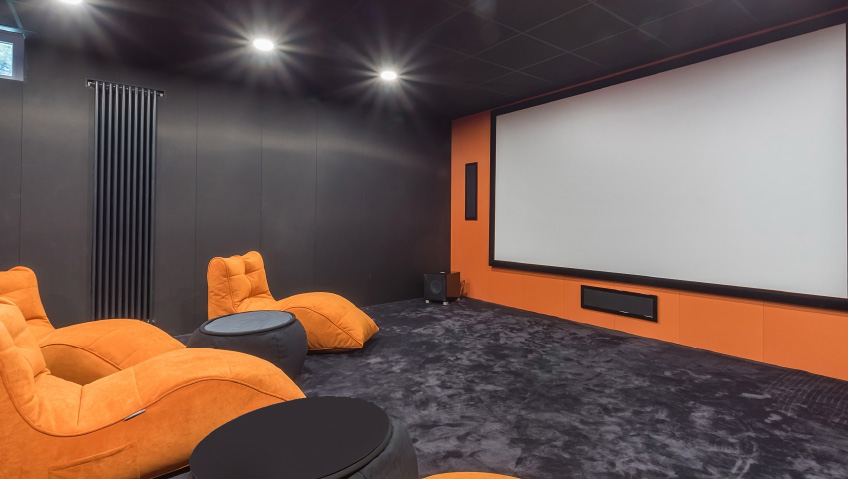
The humble basement has become much more than just a damp storage space. It has morphed into a realm of possibilities: a home theatre, a place to host a get-together, a kids’ play area, an indoor sauna, a meditation space, or even a ninja practice centre. There’s also the option to create a full suite for in-laws or a self-contained apartment for an additional income stream.
But first, the question is, why do we even have a basement at all? Surely they weren’t born from someone thinking, “I want a big hole in the ground under my house that I can climb down into and hang out in.” No, there are several very good reasons why basements were built under homes.
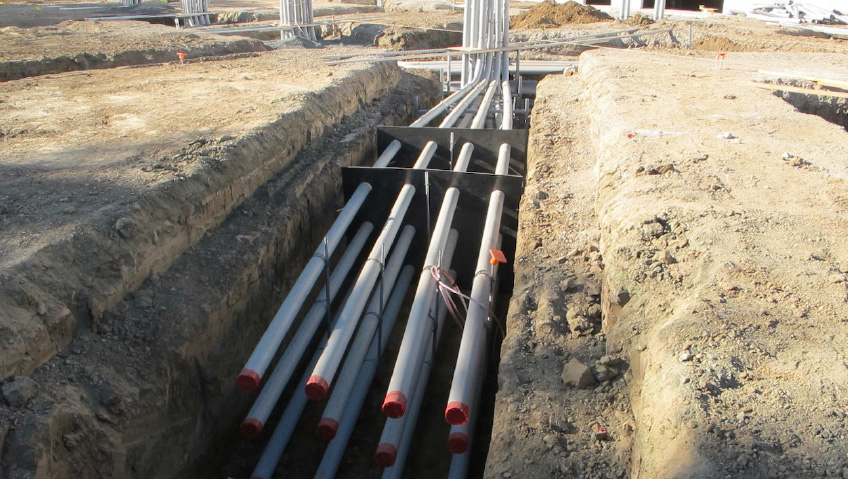
For a start, basements act as a massive anchor for a house. A basement extends the foundation of the home deeper into the earth. From an engineering standpoint, this not only lowers the house’s centre of gravity, it also firmly attaches it to the soil, protects the house from the impact of the wind, and allows the structure to settle over a more widely dispersed area. This is especially valuable in colder climates. When the temperature drops in the winter and heats up again in the summer, water in the soil freezes and then expands. If a house sits on shallow ground, this activity could actually shift a house. Digging the foundation into the ground and reaching the frost line reduces the impact of these shifts in the soil.
From there, it isn’t much more effort and expense to dig a little deeper, creating more living space while the construction crews are at it.
Another important fact about the ground is that it is an excellent insulator. The ground generally stays at a temperature of about 10 to 13 degrees Celsius in temperate areas, so basements are cooler in the summer. They were first used as root cellars storing food and coal, and for those who live in extreme weather zones, storm cellars could mean the difference between life and death. In the movie Twister, the family members hear the tornado warning and run to their underground storm cellar for safety.
Basements really make a lot more sense if you live in certain areas—the midwest or northeast of the United States, and much of Canada. In these areas, people take basements as a given of home ownership, but that is not the case in many other parts of North America. That’s because when it comes to basements, soil matters. Once you hit bedrock, building a basement is very difficult and expensive. Likewise, expansive clay is common in places like Texas. This kind of soil expands rapidly when wet and then shrinks when dry, causing movement in a house foundation which can be problematic. And in areas where soil is near-saturated with water like Florida, digging into the ground creates fishing ponds, not basements.
Even in places that are not built in swamplands, many basements fight a continual battle against ground water. Water is always looking for cracks in the foundations or for ways to seep into a basement. For the longest time, concrete was used to keep water at bay, but the materials being used in basement construction are changing and we’re seeing some important innovation.
Self-healing concrete uses crystalline additive mixtures that react to structural changes and plug cracks as they start to form. The Aeronautics Institute of Technology in Brazil began research on self-healing concrete in 2011, and current results suggest self-healing concrete eliminates the need for waterproofing, which can represent between 10 and 20 percent of the total cost of a structure, CPG reports. The durability of the material can potentially extend the lifespan of structures by an additional 20 to 30 years. The main challenge is the initial cost, which can be between 15 and 30 percent higher than conventional concrete. The material has been used in the bottom slabs of the rail stations Praça Nossa Senhora da Paz, Jardim de Alá, and Antero de Quental, all part of Line 4 of the Rio de Janeiro Metro.
There is also development into moisture sensing membranes that can send a signal to your phone warning you of the presence of water behind a wall or under the floor. The journal Microsystems & Nanoengineering discusses flexible humidity sensors for diverse applications and the possible development of membranes using the technology of the Internet of Things to provide early warning of water in the foundations of basements.
As the authors note, “Early-generation rigid humidity sensors predominantly employed polymers or ceramics as the humidity-sensitive materials, detecting moisture through measurable changes in electrical resistance or capacitance… With rapid progress in semiconductor technology and microelectronics, flexible humidity sensors exhibiting lightweight, bendable, and stretchable characteristics have emerged as a research hotspot.”
Mass timber is another emerging construction boon for basements, using pretreated or cross-laminated timber that is treated for ground use. This material can change the aesthetics of the basement, giving it a more natural look. AutoDesk outlines the benefits: “Mass timber can be as strong as steel and concrete in certain applications but is always much lighter for extending the height of already completed and occupied buildings. Mass-timber construction is often faster, less messy, and less disruptive than other methods, so life and work can continue in the floors below. The pieces arrive onsite after being fabricated at a factory. They’re slotted into place with a minimum of cutting and customization, creating cleaner, safer, and more efficient construction sites that often race ahead of traditional, on-site construction projects.”
Beyond the structure of basements, design elements can transform underground spaces into sought-after living spaces. “Most builders want to just build the house and move on and leave the basement to the homeowner,” Nick Richmond, co-founder and CEO of Matrix Basement Finishing, tells Builder Magazine. When builders make basements that can be used for little more than storage, Richmond’s company turns them into home theatres, gyms, and guest rooms. Richmond says his job would be easier if builders would consider how homeowners may want to use their basements in the future. While most newer homes have basements designed for easy conversions, it’s far from standard.
One of the most popular uses for basements is the home office, and now, they look quite different from those early pandemic days when people were hastily setting up laptops on folding tables. Now that hybrid work has become much more common, people are putting considerable effort into making their home offices professional, including smart soundproofing like acoustic wall panels to eliminate echoes during meetings. Another part of this trend is making offices dual-purpose by adding high-end murphy beds so that the space can do double-duty as an office and guest room.
Ottawa Life Magazine describes how this trend works in a home. “Modern homes are no longer rigidly compartmentalized. Instead, they embrace open layouts and interconnected zones that serve overlapping functions. This structural flexibility demands flooring that can visually and functionally support seamless movement across the home.”
Basements designed as dedicated kid zones, meanwhile, are ideal for burning off that seemingly endless energy. Such spaces can include professional-grade climbing walls, monkey bars, and Swedish ladders—climbing bars that can be attached to a wall. Here the floors are padded with high-density foam that can be used with mini trampolines or ninja obstacle courses.
These spaces can also promote learning and exploration—think STEM stations, maker benches, or heavy-duty washable surfaces for building with blocks. Some families go all-in with media zones featuring surround sound, projectors, or large screens for collaborative gaming and family movie nights. At the other end of this spectrum are what’s known as sensory nooks, which are quiet enclosed “pod” swings or reading alcoves that create an area of retreat from too much stimulation and multi-media devices.
Taken together, these evolving uses point to a broader shift in how we think about space below grade. What was once an afterthought is now being approached with the same intentionality as the main floors of a home. The basement may be the last unexplored corner of the house, but the options for making it reflect the lives of the people who live there have never been richer.