Many construction firms complete projects on time and on budget, but sometimes, they overlook one of the most important aspects of the business: communication. Dow Smith Company, Inc. is known for its quality, its professionalism, and its ability to genuinely listen to and appreciate what its clients need and want.
Headquartered in Smyrna, a town in Tennessee’s Rutherford County, Dow Smith Company is a design-build firm specializing in church, healthcare, and commercial construction. Decades of experience have taught the company that not all project types are handled the same way. There are, in fact, many differences between commercial and church projects, says Chief Marketing Officer Taylor Loyal.
Many voices
Working with the CEO of a business on a construction project isn’t the same as dealing with churches, where groups of stakeholders are involved. Some church committees are healthily focused on common goals, while others aren’t necessarily the best decision-makers. “You’re hearing different voices when you talk to a church, and you’ve got to know which voice to pay attention to,” says Loyal. “Sometimes it’s the pastor, and sometimes it’s not the pastor.”
To ensure church projects run smoothly, the Dow Smith team brings together leaders and other key decision-makers for a Three-Day Design Charrette with its design-build specialists. During these sessions, all project details are discussed, from design concepts to budgeting, blueprints, and church construction. “The goal is to ensure that everyone’s voice is heard, all concerns are addressed, and the final plan reflects the unique needs and aspirations of your congregation,” writes Loyal in Want to Build a Church? First, You Must Build a Consensus, a company blog post.
A vital first step, the design charrette allows multiple voices to be heard. As Loyal says, this is the time to align everyone’s vision and goals. It builds trust and confidence, reduces stress and disruption, and saves time and money.
In addition, church projects move slowly compared to commercial projects, and the language is different. “It’s a different lingo, a different mentality, and it’s a different mission,” says Loyal. “A good church knows it has to follow all the basics of a healthy business organization, but they have something else of concern: how can we take care of our people, our flock? It’s tough to balance both of those, but a good church has to figure that out. They have to conduct healthy business and take care of people.”
To streamline church construction as much as possible, Dow Smith Company dedicates an entire section of its website to Church Construction, alongside blog posts such as Building for Tomorrow: Key Considerations for Church Congregations. “In three days, we can do what takes other church design firms three months, sometimes six months,” says Loyal.
More than building
Construction, says Loyal, is probably the easiest part of church-building. Unlike commercial or healthcare jobs, churches face other hurdles, like getting approvals and financing the project. Building for Tomorrow discusses not only building the structure, but other vital elements in today’s churches, including secure childcare facilities, flexible multi-purpose spaces, new technology, and state-of-the-art integrated audio-visual systems.
“The interior design and décor are just as important as the design of the building itself,” Loyal explains. “It’s like icing on the cake; you can have a great cake, but if you don’t have any icing, or bad icing, it’s not a good cake experience. So we get involved in the pews—that’s the core, and we are part of that. The security in a church is very important, as is the AV system. The AV person needs to be on board day one of the design. Quite often, a church will bring in the AV person when the job’s almost complete, and it’s the little things like that that you need to be aware of for a successful church project. The earlier we can get AV people involved, the better. That’s such a big part of churches now.”
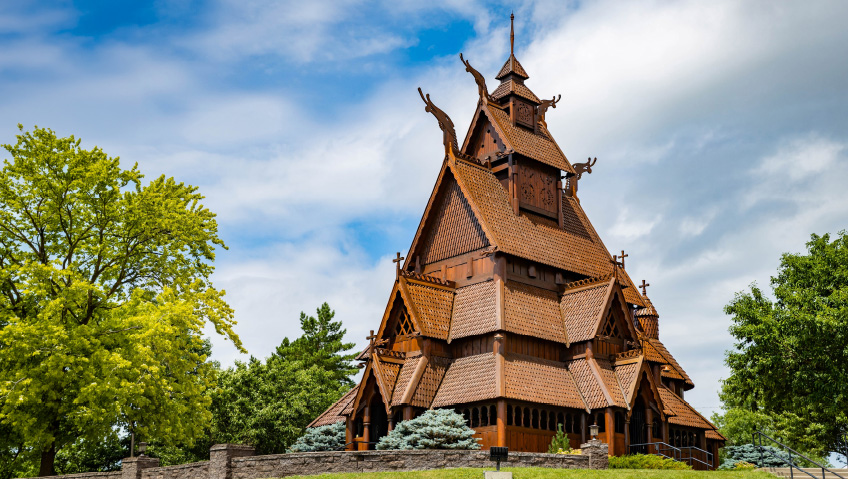
Church designs, like Dow Smith Company’s many other design-build projects, vary widely. Some, such as the LifePoint Church Stewarts Creek, have a more traditional façade, while others—such as the recently renovated lobby and restroom interior of the LifePoint Church Smyrna—incorporate sleek, high-end epoxy floors and polished concrete.
Humble beginnings
Another way the company keeps its clients informed is through its website, dowsmith.com, and the popular From the Ground Up Podcast. Launched in 2021, From the Ground Up features fascinating guests and valuable information on the design-build business and projects the company is working on. The first episode, “Starting a Business in a Little Red Truck,” discusses founder and visionary Dow Smith’s start in construction.
“I discovered my love of driving nails working with my dad and building decks,” he shares. Starting off studying engineering at Auburn University, Smith soon realized it wasn’t for him and switched to courses on building science, which helped him immensely with hands-on commercial construction training.
Doing residential jobs with his father, Smith recognized he needed to discover his own path. A friend, Frank Carlson Jr., told him of a job happening at the Smyrna Airport in 1992. Dow landed the project and hasn’t looked back since.
“Commercial construction was my calling,” says Smith, whose first office was his red Chevy truck. This led him to another job in an office building and to setting up an office of his own in the same building—essentially a one-to-three person operation to start.
A strong mission and core values
With a purpose to serve and a mission to serve Christ, and with core values that include “passion, caring, hustle, and detail,” Dow Smith Company is unlike other general contractors. The company is a Certified Best Christian-Owned Business by the Best Christian Workplace Institute (BCWI), and a member of C12. Designed for Christian CEOs and executives, the C12 format helps the business with a framework, and to align—on its signature five-point alignment matrix—revenue generation, operations management, financial management, organizational development, and ministry in and through the business.
Today, Dow Smith Company’s culture of service, streamlined processes, and transparent communication remain instrumental to its success after more than 30 years in business. These values can also be seen in the company’s subcontractors.
Taking on projects in Middle Tennessee and marketing specifically to Rutherford County, the company is experiencing growth in healthcare and commercial work, owing mainly to population growth in the area. “Our work follows rooftops, and there is a trend to that,” says Loyal. “Church-building is a unique sector.”
As a design-build firm, Dow Smith Company handles everything, including design. Whether it’s church, healthcare, or commercial, we are your one call, and we will take care of everything,” says Loyal. “As soon as you can write your idea down on the back of a napkin, that’s the right time to call us.”
Building community
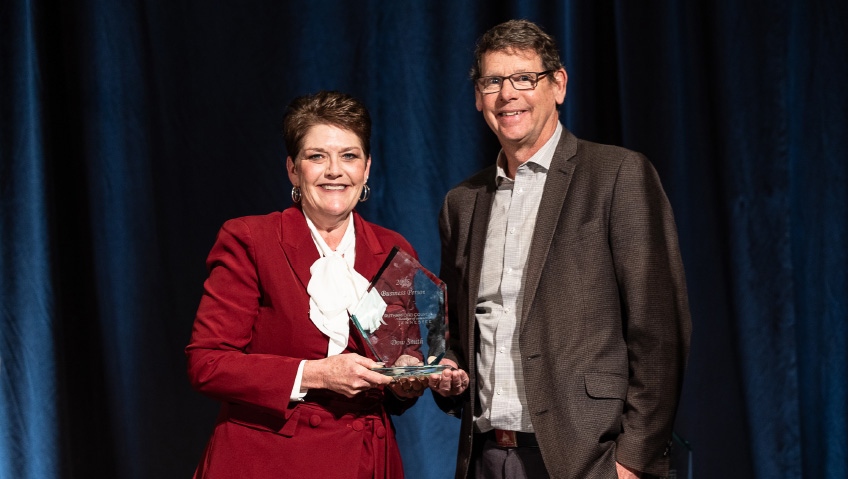
A big believer in giving back, Dow Smith Company is proud to be a part of worthy organizations in its community, and of supporting its local schools. In late February, the Rutherford County Chamber of Commerce celebrated Smith as Businessperson of the Year. “That’s a huge community honor for us, and a great honor for him, and something he shares with the whole company,” says Loyal. “It’s not a company award, but Dow will treat it as a company award. Dow believes in growing where you plant, and we are in a thriving community and a thriving geographic area. We are blessed to be right here, and as this community grows, we’ll grow right alongside it.”
Treating its employees very well, the company enjoys a low turnover rate. Some employees have been with the company for 25 years, unusual for the construction industry, and much of the reason comes down to respect.
“When people start here, they stay and grow here,” says Loyal. “A big part of that is our commitment to what we call people development. We actually have a couple of people on staff whose entire job is people development. They help our employees set personal and professional goals and work with them to grow—not just in their careers, but in their lives. That’s a big commitment we have—to help people grow.”