
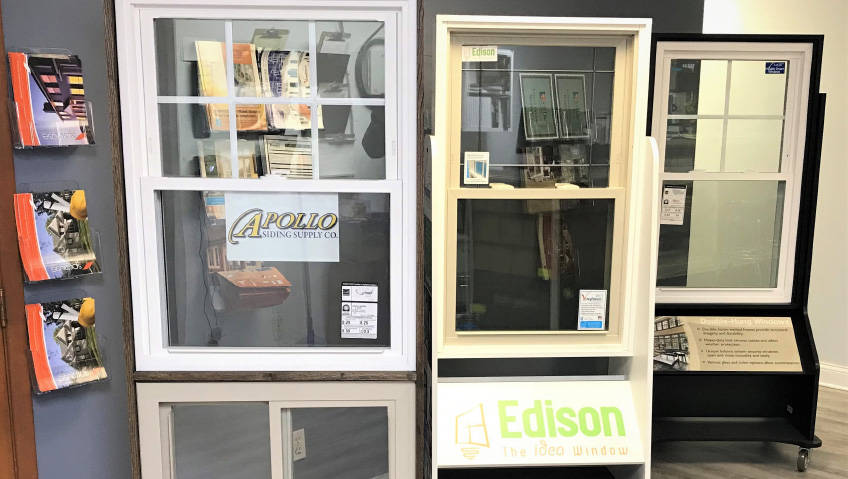
In an industry that has seen rapid consolidation over the past decade, independence has become increasingly rare. Across exterior building products distribution, national players continue to absorb regional suppliers, often trading local relationships for scale and efficiency. Yet in Cleveland and Akron, Ohio, Apollo Supply remains firmly rooted as the last family-owned and operated distributor of exterior building products in the region, and it’s not standing still.
Apollo Supply operates from four locations, serving professional builders and remodelers with wholesale distribution of windows, siding, roofing, doors, and related exterior materials. From truckload purchasing to precise job-site deliveries, the company’s role sits at the intersection of logistics, service, and trust, an intersection that demands consistency and a deep understanding of contractor needs.
At the center of Apollo’s recent evolution is a clear growth strategy focused on digital infrastructure and geographic expansion, all while preserving the hands-on, relationship-driven culture that has defined the business since its founding. The company functions squarely in the B2B world, serving builders and contractors who rely on accuracy and problem-solving to keep projects moving. Orders are rarely simple; materials arrive in bulk, are broken down to match individual jobs, and are delivered with specialized equipment capable of placing loads directly onto rooftops or precise job-site locations.
That operational complexity has shaped the company’s philosophy: everything begins with service. As Gerry Bednarcik, Marketing Manager at Apollo Supply, explains, “It’s all about making sure the customer’s getting taken care of. You have to think of them first and then work your way back from there.”
Rather than positioning itself as just another supplier, Apollo aims to become a long-term partner, and this approach is especially meaningful in an industry where repeat business is habitual and hard-won. Contractors don’t switch suppliers easily. Trust is earned gradually, through consistent delivery and responsiveness when things don’t go as planned.
The exterior building products distribution industry remains highly fragmented, but consolidation has accelerated. Large national distributors increasingly dominate the landscape, often leveraging their purchasing power and technology budgets to standardize operations. And while that scale can deliver efficiency, it often comes at the expense of local decision-making and relationships.
Apollo Supply has taken a very different path. Remaining independent allows the company to adapt faster and build relationships that extend beyond transactions. According to Bednarcik, “Our niche here in Cleveland is because we really do care about the customer.” That care shows in how Apollo operates day to day. Rather than allocating materials by region or treating accounts as interchangeable numbers, the team remains deeply engaged with customers’ success. The goal isn’t just one order; it’s a lifetime relationship built on mutual growth.
Growth, however, doesn’t happen by relying on legacy processes alone. Over the past several years, Apollo Supply has implemented a deliberate, phased digital strategy designed to modernize operations while making it easier for customers to do business.
The first phase began with a full website update, creating a clearer digital front door for the brand. That effort has continued with ongoing refinements, ensuring the site accurately reflects Apollo’s capabilities, culture, and offerings. Phase two marked a more significant internal shift: the launch of a new enterprise resource planning (ERP) system. This platform now serves as the operational nucleus of the business, housing customer transactions and internal workflows.
Building on that foundation, Apollo introduced a new pay platform that integrates directly with the ERP system. Launched in late summer, the platform allows customers to view invoices, access purchase histories, submit manufacturer rebates, and make payments anytime and anywhere. What surprised the team most was how quickly contractors embraced it. “We’ve seen tremendous adoption,” notes Bednarcik. “The customers really wanted it because it’s all about ease of doing business.” For Apollo, the success of the pay platform reinforced a central belief: when processes are simplified and friction is removed, customers respond.
Unlike national competitors with deep technology budgets, Apollo has taken a pragmatic approach to innovation. Rather than building extensive proprietary platforms from scratch, the company observes what works in the market and integrates proven solutions that align with its scale and goals.
This “fast follower” mindset allows Apollo to compete effectively without losing focus on service. Technology becomes a tool, not the headline, supporting better experiences rather than replacing relationships. The next phase of Apollo’s digital strategy continues in that spirit.
Looking ahead, Apollo Supply is targeting the launch of an online purchasing platform, known internally as Apollo Go, that will allow contractors to place orders, review pricing, schedule tentative deliveries, and manage their accounts more independently. Beyond transactions, the platform is also envisioned as an educational hub. Contractors and crews will be able to access training content related to product knowledge and installation techniques. While a firm launch date hasn’t been set, the target is approximately one year out, allowing time for refinement and integration. The focus remains clear: to ensure the platform genuinely adds value rather than introducing complexity.
As Apollo’s operational systems have modernized, the company has turned its attention outward—specifically, to brand awareness and targeted marketing. Because the company serves contractors rather than homeowners, its marketing approach is intentionally narrow; there’s no desire to cast a wide net or attract casual interest. Instead, campaigns are built around very specific demographics: business owners operating in defined regions with repeat purchasing needs.
Conversions in this industry rarely happen quickly. Relationships are built through multiple touchpoints, often long before the first order is placed. Marketing, in this context, becomes an ecosystem rather than a funnel. Visibility builds familiarity. Familiarity builds trust. Trust eventually changes habits.
The past decade marks a turning point in Apollo Supply’s physical expansion. After operating from a single location for many years, the company accelerated growth significantly with four locations since 1996, and this momentum hasn’t slowed. Conversations are already underway regarding a potential fifth location, with demographic analysis and site evaluations in progress. Expansion is not driven by ambition alone; it’s guided by logistics efficiency and the ability to replicate Apollo’s customer-first model in new markets.
While exterior building products are a mature space, shifts in materials and performance expectations continue to create opportunities, and Apollo Supply has seen strong growth by leaning into engineered cladding solutions such as James Hardie, LP SmartSide, and Ascend by Associated Materials. These products offer higher performance and durability, meeting evolving demands for quality and longevity. Manufacturers have also increased their own marketing efforts, driving awareness and adoption at the contractor level. For Apollo Supply, investing in training and marketing around these products has paid dividends both in revenue and in positioning as a knowledgeable partner rather than just a distributor.
For his part, Gerry Bednarcik’s connection to Apollo Supply runs deep. Having worked across multiple roles, from warehouse operations to early e-commerce initiatives, his perspective is shaped by firsthand experience and long-term commitment. After spending time with a Fortune 500 manufacturer, the contrast became clear. “I really feel like we’re making a difference for them, the 60 employees that we have,” he explains. “They depend on us, and we depend on our customers.” That sense of impact fuels Apollo’s culture, reinforcing the idea that growth isn’t just about scale; it’s about responsibility to employees, customers, and partners alike.
Of course, sustainability is part of the broader industry’s conversations, but Apollo approaches it with realism. The nature of the business—heavy materials and bulk transport—does limit certain initiatives. The company recycles materials such as cardboard, aluminum, and scrap generated through operations, but electrifying a fleet designed to transport thousands of pounds per delivery remains impractical at this stage. Rather than overpromising, Apollo focuses on operational responsibility and reliability, ensuring materials arrive when promised and are delivered correctly, and with minimal disruption to job timelines.
Over the next 12 months, Apollo Supply expects continued momentum across several fronts: the addition of another location, the advancement of Apollo Go, and sustained investment in digital and marketing infrastructure. But the underlying strategy remains unchanged. As Bednarcik says, “Our winning recipe is still taking care of the customer and moving forward in a larger geography.” It’s a recipe built on service and intentional growth and one that positions Apollo Supply not just to compete, but to lead in a changing industry.
As consolidation reshapes the distribution landscape, Apollo stands as proof that family-owned businesses don’t have to sacrifice their values to scale. With the pedal firmly to the metal, the company is discovering just how far that balance can take it.