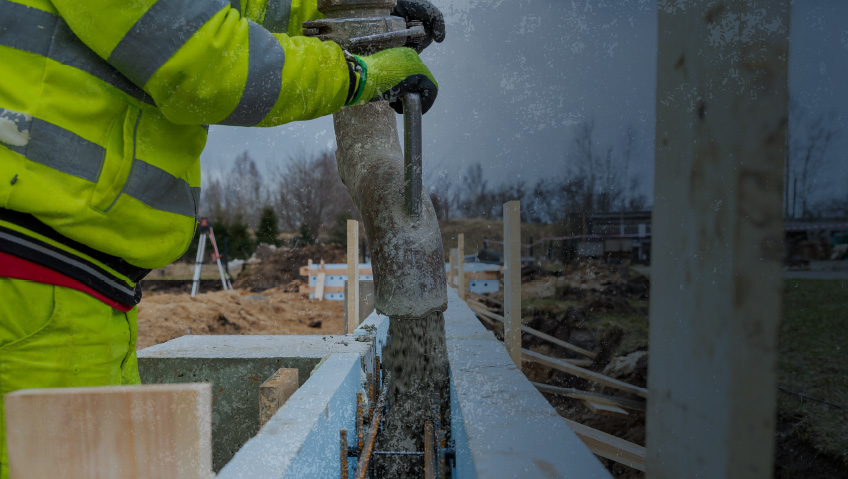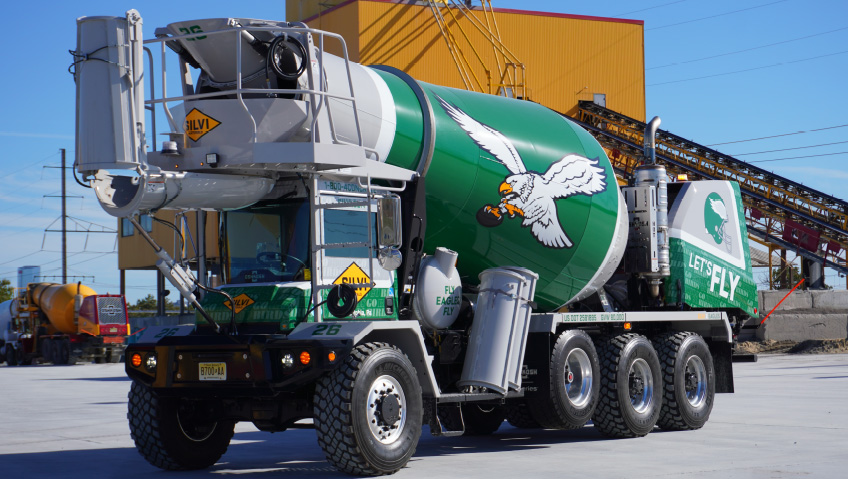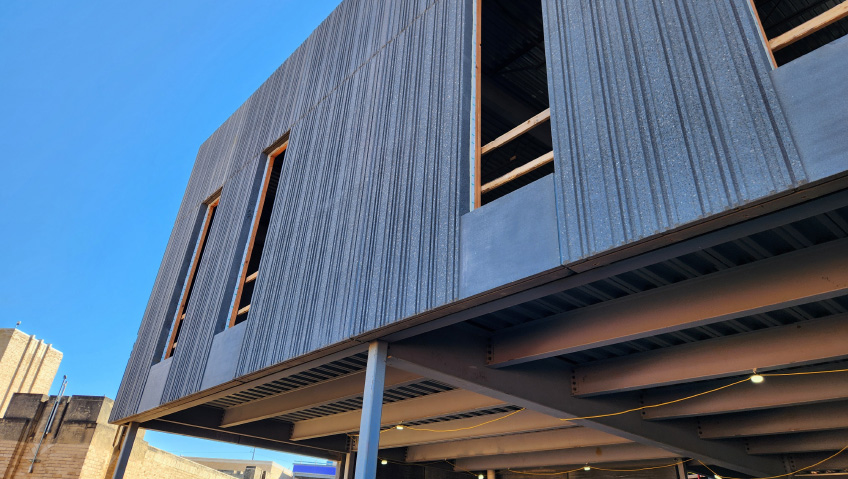

If you think there is nothing new about concrete, think again. A time-tested, proven mixture of portland cement, water, and fine or coarse aggregates such as sand or gravel, concrete as a building material doesn’t need to prove its worth. Ancient forms of concrete were used to create housing and flooring thousands of years ago, and monumental Roman structures like the Pantheon and Colosseum still survive to this very day, a testament to the material’s longevity.
Concrete is incredibly durable, and holds many advantages over other building products, starting with how it is made. Delivered in a plastic state, concrete can be molded to practically any shape, from simple, straight sections to massive, molded blocks or elaborate curves. Concrete’s ability to be coloured, painted, or textured makes it ideal for everything from sidewalks to skyscrapers to bridges. Much more fire- and noise-resistant than wood, concrete is also ‘forgiving’ and can be mixed with industrial waste materials like slag and ground-up tires that would otherwise end up in landfill. And even after a building has outlived its lifespan and is demolished, concrete is pulverized and reused to make aggregate for future projects.
Unlike wood, concrete requires little maintenance. High thermal mass properties mean concrete structures absorb heat during the day and release it at night, reducing heating and cooling expenses. And unlike wood, concrete can withstand animal and insect infestations, and stands up better to high winds, floods, and fires.
Concrete keeps evolving, becoming stronger, longer-lasting, and more environmentally friendly. Of course, no building material is perfect. Cast-in-place concrete projects in particular—especially large-scale works like dams and bridges—necessitate years of experience and high upfront costs. As a less expensive option, some builders are opting for precast concrete.
Commonly used to create road barriers, walls, and even entire structures, precast concrete is popular for many reasons. Since sections are factory-made in molds, they are uniform in size, shape, strength, and weight. Unlike concrete molded on site, precast is already cured; it does, however, require transportation to job sites, and experience in setting sections precisely in place.
Along with strength, versatility remains one of concrete’s greatest assets. New concrete products and methods of application are often introduced to the construction industry, from 3D-printed concrete to self-healing concrete.
A bold new way of using the material, 3D-printed concrete (c3Dp or 3DCP) is used to create everything from housing to multi-storey buildings and street furniture. Fast and versatile, the technology has actually been around for a long time. Created by inventor William Urschel, the first 3D-printed concrete structure was unveiled in Indiana in 1939.
Today, 3D printing incorporates robotics, computer-aided design (CAD), digital models, and automation to pump concrete resembling soft-serve ice cream into simple and complex shapes. Buildings are created layer-by-layer; unlike subtractive technology, where layers of material are removed, additive technology like 3D printing results in far less waste, making it cost-effective and capable of producing unique shapes. And such structures can be created quickly. In recent years, the technology has expanded beyond 3D concrete printed houses to include fountains and even bridges, such as IAAC’s 3D Printed Bridge, the world’s first 3D-printed concrete pedestrian bridge, located in the urban park of Castilla-La Mancha in Alcobendas, Madrid.
Recent years have welcomed not only faster and less labour-intensive applications but also stronger and more sustainable concrete, such as lightweight aggregate concrete (LWAC). Originating from natural materials such as volcanic pumice, clay, and shale, or industrial by-products like fly ash, LWAC has been around for more than a century but is now becoming popular for bridges, piers, high-rise buildings, and other purposes where weight is a key consideration. For additional strength, LWAC is sometimes used with glass fibre-reinforced polymer rebar, or GFRP. Unlike regular rebar, GFRP is more resistant to corrosion, and ideal for marine structures.
Along with lighter concrete, other innovative advances are making builders take notice, like Ultra-High Performance Concrete (UHPC). Comprising about 80 percent regular concrete, UHPC is mixed with fibres, some having the strength of polyester or stainless steel. The result: extremely durable concrete requiring far less maintenance, and with a much longer lifespan than its traditional counterpart. First used by the U.S. Army Corps of Engineers about 40 years ago, UHPC is increasingly used for precast concrete piles, seismic bridge retrofits, and pre-stressed girders and precast bridge deck waffle panels. As a further testament to its popularity, the global market for UHPC is booming, with an estimated Compound Annual Growth Gate (CAGR) of 8.3 percent from 2019 to 2024.
Not to be outdone, another popular product is self-healing concrete (SHC). Regular concrete is prone to surface cracks and bends after it is poured, and ancient Romans first noticed that adding limestone-producing bacteria to the mix helped bind mortar and aggregates.
About 20 years ago, Prof. dr. H.M. (Henk) Jonkers, a Dutch microbiologist, developed a modern self-healing concrete. What sets today’s SHC apart from other self-healing concrete is the type of bacteria species used, specifically Bacillus pseudofirmus and B. cohnii. These species consume oxygen, which prevents air from entering concrete and corroding rebar. Able to last hundreds of years, SHC is well-suited for structures that are costly to repair and need to be long-lasting, such as bridges and tunnels. For its many advantages, there are a few drawbacks to SHC; the bacteria will not thrive in all environments, specialized labour is needed, and the price of SHC is about double that of conventional concrete.
Other recent innovations include translucent concrete such as LiTraCon, developed in 2001 by Hungarian architect Áron Losonczi working with scientists at the Technical University of Budapest. Based on nano-optics, or nanophotonics, light is transmitted via optical fibers from one side of a surface to the other side. The thinner the concrete, the more light is transmitted. Instead of concrete appearing heavy and imposing, such concrete takes on a translucent, glowing quality.
Light-emitting cement, meanwhile, is a phosphorescent cement that can be used to illuminate highways, bike paths, and buildings without the use of electricity, developed by Dr. José Carlos Rubio Ávalos, a researcher at the University of Saint Nicholas of Hidalgo in Mexico. The product contains light-emitting ‘glow in the dark’ pigments and, when mixed with traditional cement, sand, gravel, and water, is poured into molds and cured. Buildings, roads, or structures made with this cement absorb solar energy during the day and emit it during the night for around 12 hours.
As the concrete industry continues to innovate, new developments can be explored and shared at one of its biggest forums, the World of Concrete (WOC) expo, the sector’s only annual international event focused on the commercial concrete and masonry construction industries. The next instalment of WOC will take place January 20th to 22nd in Las Vegas, Nevada, with the educational portion starting on January 19th. With educational programs, interactive workshops, hands-on training, and plenty of exhibitors, attendees can enjoy product categories on everything from aggregates, cement plants, and coatings to drones, finishing tools, equipment, and much more.
An ancient material, concrete is nonetheless far from static. From 3D printing and self-healing formulations to translucent and light-emitting varieties, each new development takes the industry further and addresses unique challenges or needs. What began as a simple mix of cement, water, and aggregates has evolved into one of the most dynamic materials shaping our built environment. With ongoing research and events like World of Concrete driving collaboration and discovery, the future of construction isn’t just built on concrete—it’s being reimagined by it.