As architects, builders, and homeowners demand materials that deliver greater durability, stability, and long-term value, the limitations of traditional wood products have become increasingly apparent. Exposure to moisture, weathering, and biological attack can compromise performance over time, particularly in demanding exterior applications.
Accoya is a high-performance, sustainable acetylated wood designed to overcome these challenges. Offering exceptional durability, dimensional stability and reliability, it provides the beauty and versatility of natural wood with performance typically associated with far more resource-intensive man-made materials or tropical hardwoods.
Accoya has been steadily gaining popularity in North America and has gained traction through its use in landmark projects ranging from hospitality and residential developments to major restoration and public infrastructure projects including the Rivington Hotel in Manhattan, the zero-carbon Marisol Malibu, and the restoration of the Minnesota State Capitol.
“Accoya is the most durable and stable wood in the world,” says Sergio Munhoz, North American Sales Director. “It’s a modified wood made with radiata pine that goes through a process we call acetylation. After the reaction and change on a cellular level, this wood becomes extremely strong and durable, ideal for outdoor use.”
Changing wood at the cellular level
The acetylation process permanently transforms wood at a cellular level by increasing its naturally occurring acetyl content. This changes how the wood interacts with the elements, minimizing rot and decay. The result is an exceptionally durable material backed by a 25-year warranty for in-ground use and up to 50 years for above-ground use. The finished wood is completely non-toxic, contains no plastic, and can be recycled at the end of its life as normal wood.
Acetylation, in contrast to many preservative systems, penetrates the board’s thickness rather than acting as a surface layer. Because Accoya is transformed at the cellular level, users can drill, profile, and cut it without compromising its performance. This gives designers and manufacturers greater flexibility than many other wood species, for which exposed end grain and re-cut edges can become vulnerable.
“This is a unique product in the marketplace that customers love,” adds Munhoz.
These customers include landscape architects and manufacturers of siding, decking, windows, and doors, all citing the versatility of this product when compared to other woods in the market. “It’s workable and machinable but with the power of a hardwood,” Munhoz says. “People love it because it’s extremely stable, durable, and long lasting.”
Specified for high-profile projects
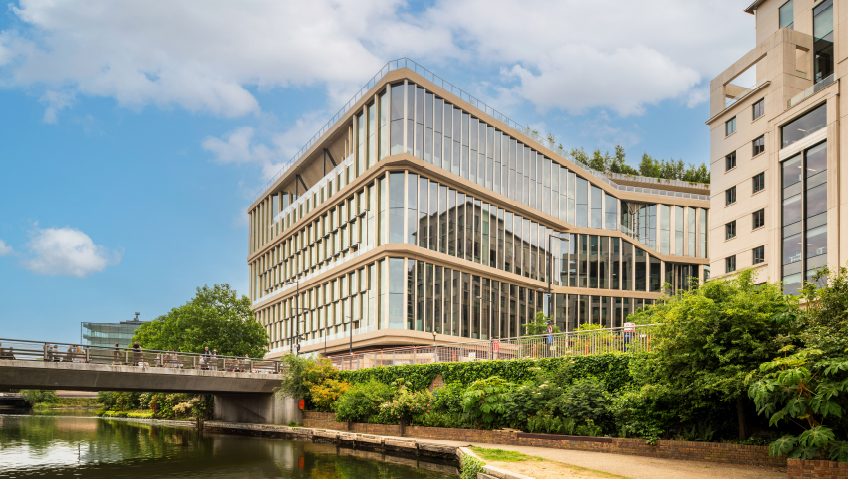
Some notable Accoya projects include the Bow Bridge and Gothic Bridge—both featuring Accoya decking—in New York’s Central Park, as well as the MOLLIE Hotel in Aspen siding; the Ark Encounter in Kentucky; and Google’s UK headquarters. The Google development is particularly distinctive. “It’s called a landscaper, similar to a skyscraper but in landscape mode,” Gillian Edwards, Head of Communications and ESG at Accoya, says of the Google project.
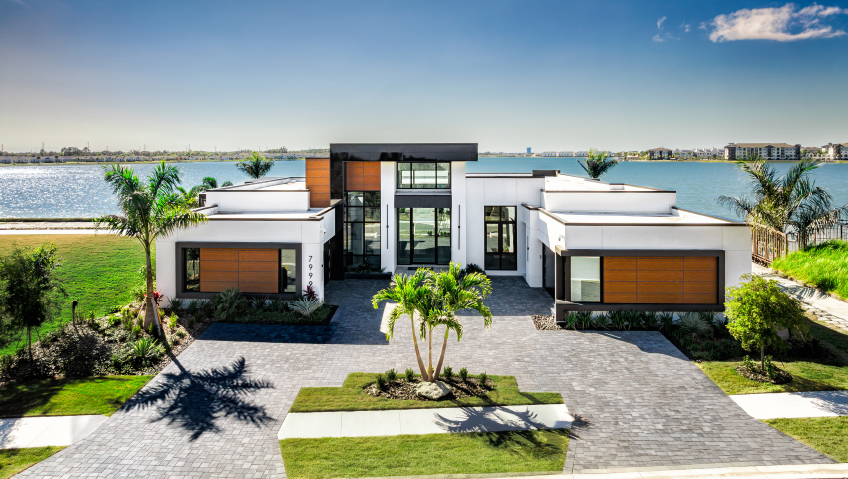
Growing investment in outdoor living is increasing demand for siding and decking that combine long-term performance with a natural look and feel. This preference for wood over plastic or metal gives Accoya a strong fit with the way homeowners and designers are approaching exterior spaces.
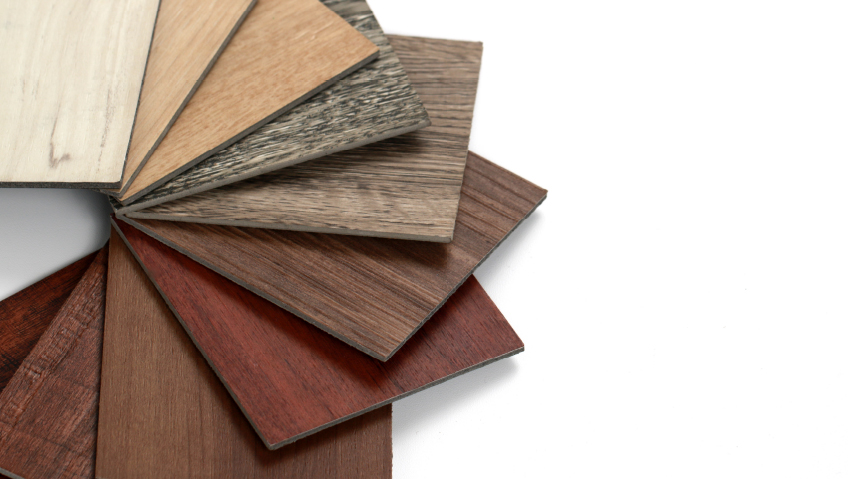
“That’s something we have seen as a trend in natural design, and it’s helping us grow faster and make Accoya a good solution,” adds Munhoz. The radiata pine used to manufacture Accoya also allows for a beautiful grain and a light color that in turn permits a wide variety of different, beautiful finishes.
On top of offering the regular natural look, a newer product, Accoya Color Gray, goes through an additional process that impregnates pigments on the wood all the way through, meaning it can be cut and sanded and is colored through from surface to core without requiring a coating. “It’s natural. It’s beautiful—the soft touch, the feel—it’s amazing, and it offers the same warranty and the same properties, and it’s extremely popular,” Munhoz shares. “People love it.”
Local production supports wider adoption
Until recently, Accoya supply in North America was relatively constrained because all material was imported from Europe. That changed in September 2024 with the opening of the Accoya USA facility in Tennessee. With local production now fully operational, customers can benefit from improved availability, faster delivery, and responsive service.
“We’re growing significantly,” says General Manager, Rod Graf. “It’s about being able to let people know that we are here and we’re much more available. We’re still providing that special product, but now you can get your hands on more.”
Sustainability and performance hand in hand
Accoya’s performance is supported by strong sustainability credentials. All of it is made from responsibly sourced, FSC (Forest Stewardship Council) certified wood, coming from well managed plantations in New Zealand. “Even as we grow and expand, the reason we choose New Zealand is that the wood grows very fast, so it’s on a 25- to 28-year cycle,” Edwards explains. “It can grow quickly and it can replenish quickly, and that makes it very sustainable.”
Accoya is low carbon over its lifetime. Because of its long service life of 60 years and excellent stability, the need for repair, restoration, and maintenance is dramatically reduced. Several coatings manufacturers even offer up to 15 years’ warranty for coatings on Accoya.
Accoya holds Cradle to Cradle Gold V3.1 certification, one of the strictest and most stringent eco labels to exist. “Accoya is one of the very few building products that is Cradle to Cradle Certified Gold, which is very difficult to get,” says Edwards. “It takes us about a year and a half to go through the certification process, which looks at all aspects of manufacturing, the ingredients of the product, whether they can be recycled, and the energy we use.”
The process even looks at health and safety, making sure the company is looking after its people and workforce. “It’s a really, really rigorous standard, and one we’re very proud to have.”
Accoya’s EPD can also help specifiers to achieve LEED v5, meeting high standards for environmental sustainability. “We have a verified EPD (Environmental Product Declaration) which is becoming very important for architects,” says Edwards. “There’s a lot of regulation now that’s looking at the whole embodied carbon of a building, so having an EPD is essential for people to be able to factor in the impact of our product.”
Its high performance attributes position Accoya at the premium end of the market. “It’s a premium product because of the performance attributes—the 50-year warranty, the 60-year service life, and the extremely low maintenance costs over the life of the building,” he says. “When the customer understands these benefits across time, they understand that it’s going to be cost-effective for them and their projects, and they love it.”
Now, Accoya is focused on expanding its range of products as it grows and attracts more customers, with different profiles and sizes to suit a broader range of requirements. The company is also continually exploring new, local species that may work as well as radiata pine.
More than a product, however, the personal belief in what Accoya is doing for the industry—and the environment at large—is vital. “I’m Brazilian, and I grew up in Brazil seeing a lot of tropical hardwoods around when I was a kid, and I don’t see those when I come back to see my family anymore because they’ve harvested those trees that live 150 years,” says Munhoz. “Every time I sell Accoya, I believe people are cutting fewer trees from my home country. That for me means a lot. I have some emotions behind it myself. I believe in this company. I was drawn by that.”
Edwards also has a personal connection to the company and its product. “We’ve got a purpose statement, which is ‘changing wood to change the world,’ and I was very drawn by that,” she says. “But I’m also a product advocate as well. Before I joined the company, I had some Accoya sash windows installed. I live in London, UK and we have Victorian housing where windows get jammed when it gets hot or wet. The Accoya ones I can vouch for have never gotten jammed and move perfectly like the day they were installed.”
For Graf, joining Accoya USA meant building a strong local business, creating skilled jobs, and increasing access to a product that offers something distinctive. “It’s the best substrate, the best wood fiber in the world,” he says. “It’s gold. It’s just a fantastic product.” He has also been struck by employees’ desire to work for a company with a sustainable product, strong environmental credentials, and recognized certifications.
“It has also impressed many of our clients,” says Munhoz, who have heard it’s the only wood that allows architects in New York City to not use metal or aluminum in some of their projects because of the product’s stability and other properties. “That’s powerful because we know that metal and aluminum are not really sustainable products… that’s super powerful.”