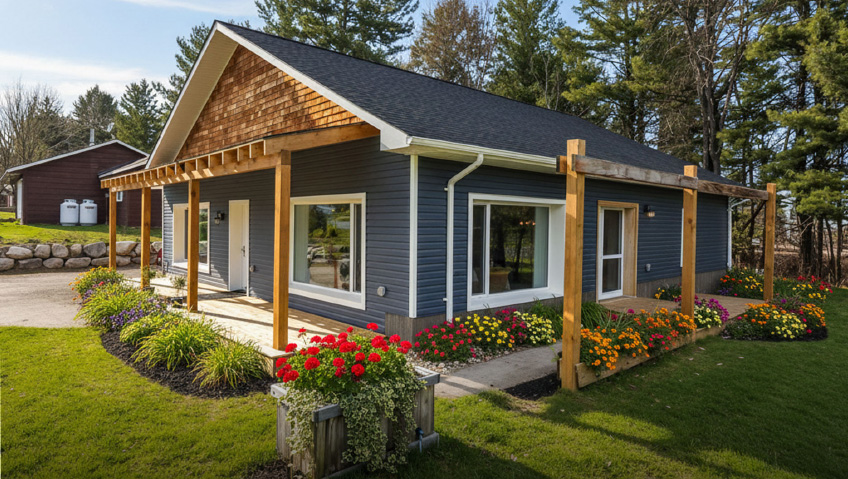
Long before the push for green construction was formalized, green construction principles and materials played a significant role. Lumber, for example, has historically been prized by construction professionals as a renewable resource that competes with alternative building materials on cost, availability, and performance.
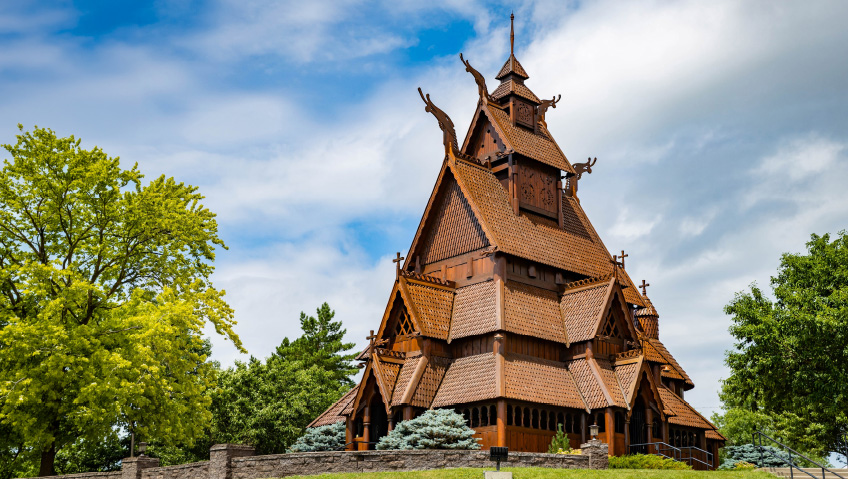
There is evidence of timber homes from the Mesolithic period (stone age), as well as Norwegian Stave churches from the 12th and 13th centuries where original structural wood is still intact. Today, with the advent of modern tools, the efficiency with which wood is used has greatly improved, making it an even more viable high-performance construction material. But the advent of Portland cement in the 1820s resulted in mass concrete structures becoming the standard. This was especially so when steel reinforcement was introduced in the 1850s.
However, with changing building standards and material evolutions, wood has once again gained prominence as a building material of choice, regarded for its functional, environmental, economic, and aesthetic performance.
The original green building product
Green construction was established as a formal concept in the 1960s and gained traction during the energy crisis of the 1970s, but it wasn’t until the 1980s, when it was formalized by the UN, and the 1990s, when it was enshrined through formal standards and organizations, that green building really took command of hearts, minds, and projects that sought to have a positive impact on their communities.
Over the last several decades, new rating systems and government support have reinforced these standards, encouraging the adoption of environmentally sustainable materials, approaches, and perspectives, particularly when it comes to the use of wood products.
Lumber serves as an extremely workable natural resource that has been used in construction for thousands of years but continues to contribute to the beauty and function of projects around the world, especially with the advent of mass timber engineered wood products, which are composed of multiple layers of solid wood panels held together by glue, nails, or dowels.
Engineered wood products are regarded for their high strength-to-weight ratio, which can exceed steel by 20 percent and non-reinforced concrete by four to five times. Engineered wood also boasts flexibility when compared to raw timber materials, which means they can be used for load-bearing applications and larger structures. Used for floor and ceiling beams, roof and wall panels, framing studs, door and window headers, and much more, the advantages of its use are endless but have not been recognized fully due to regulatory barriers.
One of the biggest impediments to the adoption of mass timber in North America has been outdated building codes that previously capped mass timber structures at no larger than six storeys, or 85 feet. As such, mass timber projects were limited to residential homes and smaller buildings until 2021, when regulatory changes allowed the building material to realize its full potential.
And that it did.
Built in 2022, the Ascent MKE in Milwaukee, Wisconsin is the tallest mass timber building in the world. Standing at 284.1 feet tall, the 25-storey luxury residential tower features a hybrid structure of cross-laminated timber (CLT) and glue-laminated timber (glulam) on top of a concrete podium that composes the building’s base, stair, and elevator shafts.
According to Korb Architecture, who was part of the project team, “While pushing the boundaries of mass timber design, Ascent’s development underwent ample research, testing, engineering analysis, and product certifications to prove its safety and durability.” This was achieved in partnership with the USDA’s Forest Products Laboratory in Madison, Wisconsin, where the team completed the world’s first three-hour test for glulam timber columns.
Further to being the tallest mass timber structure in the world (for now), the project exceeded building energy code standards and life safety standards. Aesthetically, much of the wood was left visible, with each apartment featuring exposed wood columns, beams, and ceilings.
The project was built in about half the time it would take for a concrete building to go up and enjoys a number of performance advantages over steel and concrete, chiefly that it sequesters nearly 7,200 metric tons of carbon dioxide, which is significant.
This ability to store carbon is the equivalent of removing 2,400 cars from the road for a year, or the amount of CO₂ emitted by heating 1,200 homes in a year, while the volume of timber used on the project can be regrown in no time at all throughout North American forests.
Economically and environmentally superior
According to a study titled Comparison of Embodied Carbon Footprint of a Mass Timber Building Structure with a Steel Equivalent (by Hemmati et al.), mass timber can result in a 19 percent reduction in emissions versus steel. It also results in a lower processing impact compared to concrete and steel as it requires less water waste. In fact, many lumber mills have turned to the wood byproducts the industry produces for use as biofuels for their facilities, which further improves the environmental performance of the material as it reduces reliance on fossil fuels for its production.
Another study found that mass timber materials have the potential to store between 9.9 and 16.5 million tons of CO₂ per year for 50 years, which equates to 12 to 20 percent of the total U.S. harvested wood products’ carbon storage for 2020. By 2034, there is the potential for mass timber to store more carbon than North America’s construction industry emits.
Where selective harvesting, forest management, and replanting practices have been instituted, the benefits of lumber as a renewable resource are truly endless. The natural cellular structure and insulative properties of lumber results in less demand on heating and cooling energy for the structure, which drives down costs and environmental impact. Likewise, lumber can help regulate humidity levels, avoiding rot and supporting a longer lifecycle.
Wood building products are also regarded for their seismic performance, fire safety (as it has been engineered to char predictably), countless environmental and aesthetic benefits and, thanks to its efficiency and the ability to prefabricate components, faster construction with less physical labour. All of these factors make the material cost-competitive and extremely valuable at a time when skilled labour is dear.
Wood also has a positive impact on the built environment and everyone in it, as exposure to nature and natural elements supports health outcomes such as improved cognitive function and psychological wellbeing, lower blood pressure and stress response, better immune function, and faster healing and recovery. Its sound absorption properties contribute to a calming environment, which makes it a design team’s dream.
A commodity worth protecting
Lumber is not only important for construction; it also constitutes a major portion of Canada’s economy, and its value is evident as it has long been the source of political tensions, chiefly the softwood lumber dispute that has long muddied relations with the U.S.
Softwood, which is derived from coniferous trees, represents the majority of wood products produced and is primarily sourced from British Columbia, while Canada’s hardwood industry is primarily based in Quebec, Ontario, and the Maritimes. Alberta is regarded for its large volumes of aspen and poplar, which are not technically hardwood but are significant contributors to the sector.
According to figures from Natural Resources Canada, the forestry sector contributed $33.4 billion to Canada’s nominal GDP in 2022, employing more than 212,000 people, with most of the lumber produced being exported (making Canada the fourth largest forest products exporter in the world). In 2022, total forest product exports generated $45.6 billion, which is subject to tariffs and restrictions imposed by the U.S. to protect the domestic industry from competition. This has resulted in Canada’s seeking new market relationships with countries like Japan, China, and EU nations.
However strong, the sector is undergoing change in Canada due in large part to the loss of large sawmills in the country, a ripple effect from the fall in demand for paper products as well as a move toward more technically efficient operations. But with the growing trend toward mass timber construction and continued demand for tried-and-true lumber products that are renewable and sustainable and contribute to the overall performance of project outcomes during construction and upon completion, wood will continue to be prioritized by construction professionals.
Lumber is good for the function and aesthetic of spaces, as well as the economic and environmental bottom lines, advantages that cannot be denied. Through sound policies, governments can ensure that the many advantages of its use in construction are maximized.